
01
Batch control that holds tolerances
Measure drawdowns and coated panels against a locked standard, then hold ΔE tolerances batch after batch. Pass/fail replaces opinion on the shop floor.
Applications & surfaces
Control batches, finishes and supplier color across drawdowns and coated panels. Use one documented method from production to final inspection, on the line or in the lab.
Why color drifts
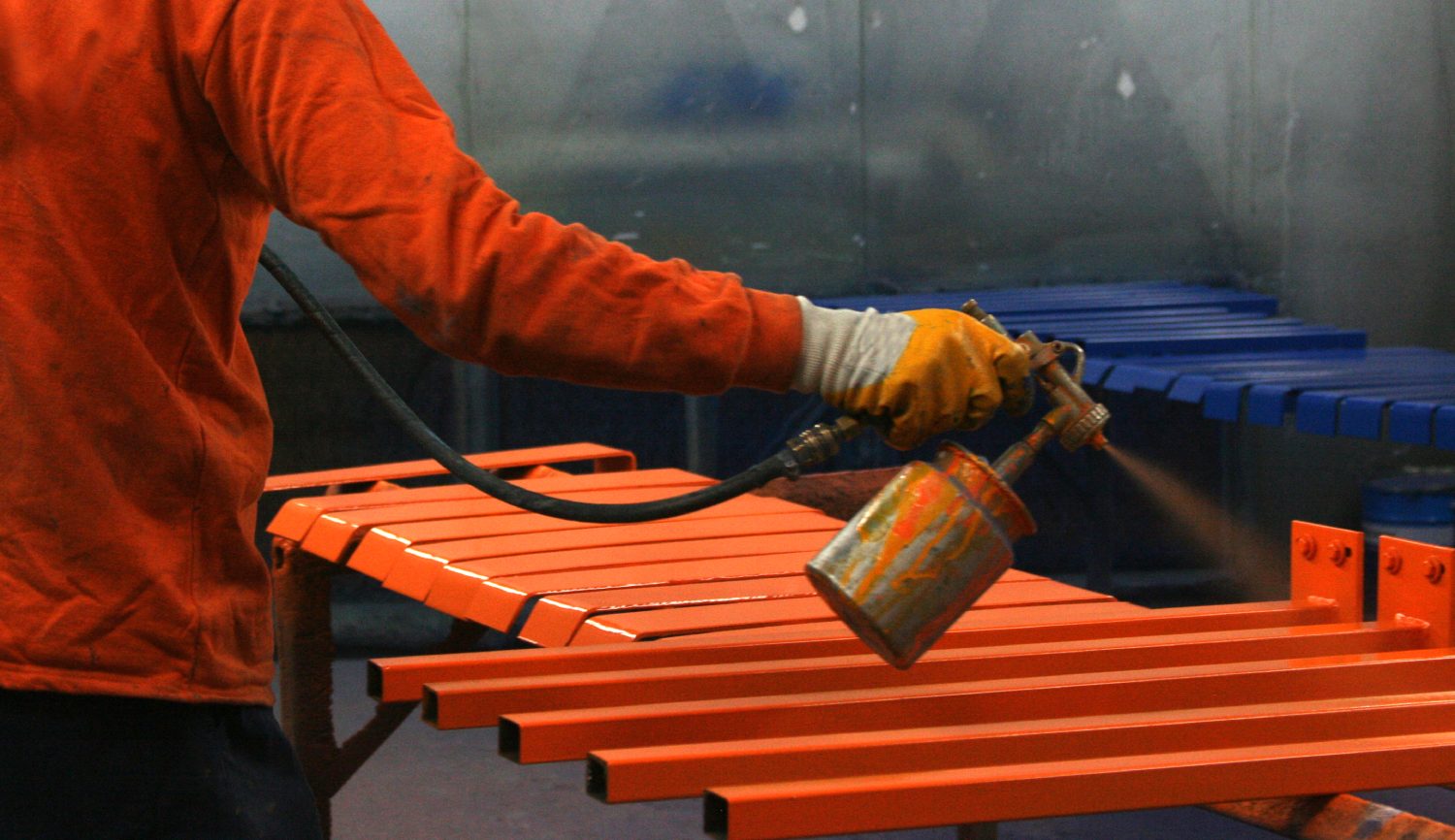
Pigment lots vary, spray guns age, film builds shift and supplier panels arrive a shade off. Visual approval catches the worst of it — but by then the batch is made, the panel is coated and the argument starts. Instrumented measurement catches the drift at the point it happens, when the fix is still cheap.
Measure drawdowns and coated panels against a locked standard, then hold ΔE tolerances batch after batch. Pass/fail replaces opinion on the shop floor.
Solid colors: d/8° with SCI/SCE separates material color from surface gloss. Metallic and pearlescent finishes change with viewing angle and need a multi-angle instrument.
Share standards and measurement data with every supplier. Incoming coated panels are checked against the same numbers your spec sheet quotes — before they enter production.
Instrument options
Choose a portable instrument for production, incoming and on-site checks, or a benchtop instrument for controlled laboratory presentation and repeatable quality assurance. The SD-700 featured below is one relevant portable option—not the full range.
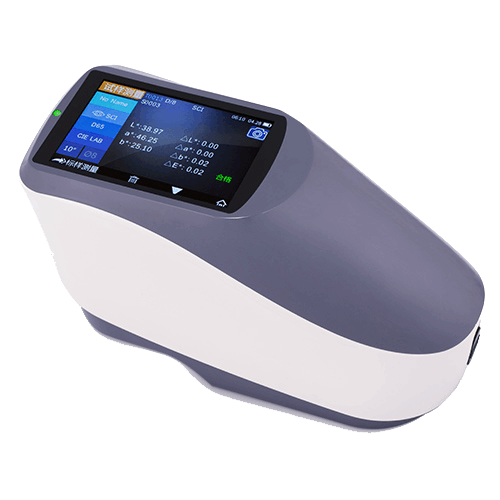
Portable UV grating spectrophotometer
US$5,995
d/8° geometry with switchable SCI/SCE, 400–700 nm spectral measurement and camera-assisted positioning — built for batch approval, finish matching and supplier color checks on coated surfaces.
Where it pays off
The same standard follows the color from raw material to finished goods, so every team measures against the same target.
Approve incoming pigment lots and release production batches against locked color standards, with ΔE records for every batch.
Check first-off panels through every shift. Catch gun, film-build and cure drift while it is still correctable on the line.
Verify coated components and panels against the purchase spec before they reach production, with data to back up a rejection.
Using the same instrument model and a locked method keeps inter-instrument differences small and quantifiable. Verify agreement with shared correlation panels before relying on cross-site pass/fail.
Measure solid-color automotive and industrial finishes with a defined geometry and specular condition. Metallic and pearlescent effect finishes require multi-angle measurement.
Match solid-color repairs on panels that cannot move to a lab — the instrument goes to the part, in the booth or on the floor. Effect finishes require multi-angle measurement and a validated refinish method.
Specifying with confidence
d/8° is widely used for solid-color paint work; some specifications call for 45°/0°, and the two geometries are not interchangeable. With d/8°, SCI includes the specular component, so gloss differences have less effect and the result better represents material color. SCE excludes it, making the result more sensitive to the appearance a viewer sees.
The SD-700 is designed for dried or cured films: drawdowns, panels and parts. Wet-paint measurement needs a dedicated cell or fixture and its own standard, correlated to the dry film. Talk to us about benchtop options.
There is no universal number. Limits depend on color region, finish, formula and customer requirements, and should be set from visual trials and measurement capability. ΔE00 or CMC are often preferred over ΔE*ab for paint specifications. See our Delta E tolerances for paint guide.
When the standard, geometry, specular condition, aperture, calculation settings and tolerance are written into the purchase spec, both sides can compare data. Verify instrument agreement on shared correlation panels before using results for pass/fail.
Related applications
Tell us about your coatings process — batch control, finish matching or supplier color — and we'll spec the measurement setup that keeps every batch on target.
SCI & SCE
SCI reduces the influence of coating gloss and texture; SCE is more sensitive to finished appearance. Paint specifications must name one condition and use it consistently.
Technical guide · Read the guide →SCI & SCE
Measure glossy coating color with controlled handling, orientation and specular condition, while treating gloss, haze and image clarity as separate appearance properties.
Technical guide · Read the guide →Aperture Size
Measure textured coating color with an aperture and sampling plan large enough to represent peaks, valleys and directional structure without hiding local variation.
Technical guide · Read the guide →Delta E
Set paint Delta E tolerances from approved visual trials, process capability and measurement uncertainty, then add component and appearance limits where total difference is insufficient.
Technical guide · Read the guide →Measurement Techniques
Control coating batches with protected standards, repeatable specimen preparation, trend limits and a documented response plan before color drift reaches the customer.
Technical guide · Read the guide →Measurement Techniques
Measure paint color with a controlled drawdown or coated panel, fixed instrument settings and an approved standard so the result represents the production decision.
Technical guide · Read the guide →Measurement Techniques
Measure powder-coated metal with controlled substrate, film build, cure, gloss, texture, orientation and sampling so color data represents the finished coating.
Technical guide · Read the guide →Buying & Selection
Choose a paint spectrophotometer from the coating type, sample state, geometry, aperture, UV needs, repeatability, instrument agreement and data workflow—not price alone.
Technical guide · Read the guide →Multi-Angle Measurement
Metallic and pearlescent coatings require angle-resolved color measurement, representative panels and separate control of gloss, texture, sparkle and graininess.
Technical guide · Read the guide →Fundamentals
A complete framework for controlling paint and coating color from wet batch and laboratory drawdown to cured film, coated component and supplier approval.
Technical guide · Read the guide →Measurement Techniques
Wet paint readings support rapid batch adjustment, while dry-film readings represent the applied product; the two need separate standards and a validated correlation.
Technical guide · Read the guide →Measurement Techniques
Reliable color measurement on textured surfaces requires a defined geometry, large enough aperture, controlled orientation and a sampling plan that represents spatial variation.
In-depth practical guide · Read the guide →