
01
Batch consistency
Hold tile, panels, laminates and coated components within a controlled production range.
Construction & architecture
Measure tile, stone, laminates, powder coat and architectural finishes with methods built for texture, gloss, scale and natural material variation.
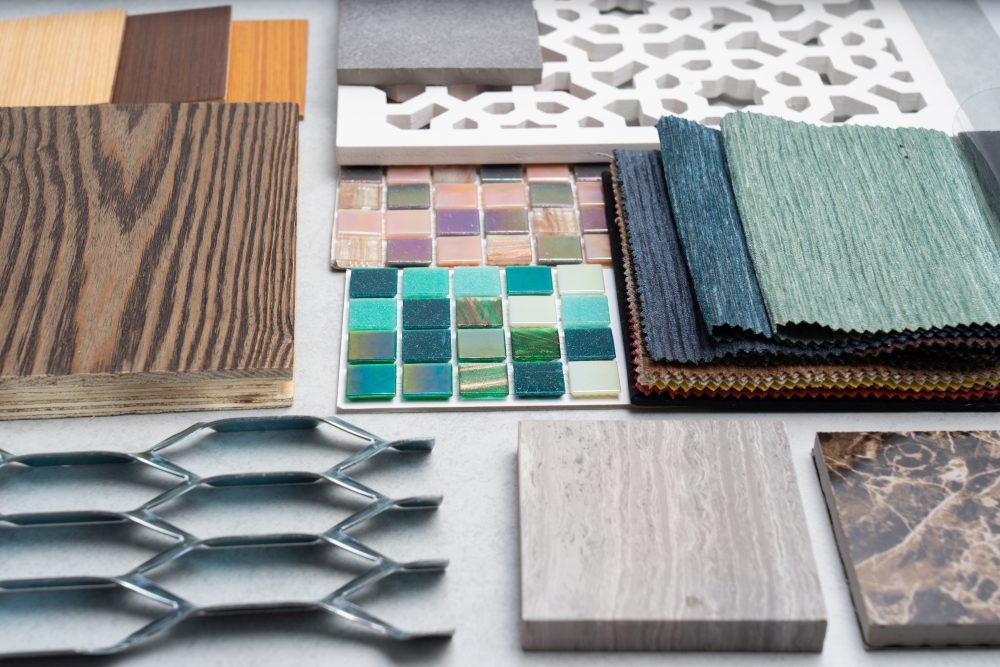
Why color drifts
A small smooth standard cannot always represent a textured tile, veined stone slab or powder-coated extrusion. Surface direction, gloss, cure, mineral variation and viewing area can all shift the result. The method has to represent the installed product as well as the material recipe.
Hold tile, panels, laminates and coated components within a controlled production range.
Use representative apertures, fixed orientation and multiple locations for grain and relief.
Turn architectural finish schedules into measurable purchase and incoming-inspection criteria.
Instrument options
Portable instruments are practical for large panels, installed surfaces and receiving inspection. Benchtop instruments support controlled laboratory specimens, sample holders and repeatable batch-development work.
Where it pays off
Control body, glaze and fired-surface color across batches and kiln positions.
Characterise natural spread with multiple locations rather than one convenient point.
Align decorative layers, boards, edge treatments and supplier lots.
Track substrate, film build, cure, color and gloss on panels and extrusions.
Verify large-area materials against approved ranges before installation.
Translate named finishes into physical standards, methods and supplier tolerances.
Method notes
| Decision | Common starting point | Why it matters |
|---|---|---|
| Sampling | Measure several representative locations | Large and patterned products can vary within one piece as much as between pieces. |
| Orientation | Fix grain, texture and instrument direction | Directional texture and gloss can change the measured result after rotation. |
| Aperture | Use the largest area the part permits | A representative area reduces sensitivity to individual pores, grains or texture peaks. |
| Condition | Control cure, moisture, dust and temperature | Surface contamination and unfinished processing can create false shifts. |
Natural variation needs an acceptance range
Stone, mineral products and textured finishes may not suit one-point matching to a single master. Use approved boundary samples or statistically established ranges, then define how many pieces and locations must comply.
Specifying with confidence
A nominal target can describe the centre of the range, but natural variation is usually better controlled with approved boundary samples, component limits and a defined sampling plan.
Use an aperture that averages many texture features, keep orientation fixed and measure multiple positions. Confirm the port sits securely without stray light.
No. They influence appearance but are different measurands. Set a color method and, where required, a separate gloss specification.
Yes when the portable and laboratory methods are correlated and the installed surface can be presented safely. Curvature, dirt, weathering and temperature still need consideration.
Related applications
Tell us the material, surface texture, sample size and production tolerance. We’ll help define a practical measurement method.
Measurement Techniques
Measure laminate and composite surface color by controlling décor, texture, gloss, grain direction, protective film, substrate and patterned-area sampling.
Technical guide · Read the guide →Aperture Size
Measure color on brick, render, stucco, pavers, roofing and other textured building materials with controlled geometry, aperture, contact, orientation and sampling.
Technical guide · Read the guide →Measurement Techniques
Measure natural stone color by controlling finish, moisture, sealer, orientation and geological variation, then characterising a distribution rather than one spot.
Technical guide · Read the guide →Color Science
Use whiteness and yellowness indices on comparable building products with a named formula, illuminant, observer, UV condition and controlled surface state.
Technical guide · Read the guide →Delta E
Set architectural color tolerances from a named formula, controlled surface method, approved boundary samples, adjacency risk and measurement capability.
Technical guide · Read the guide →Buying & Selection
Choose a building-material spectrophotometer by matching geometry, aperture, UV, portability, fixtures, surface contact and site agreement to real products.
Technical guide · Read the guide →Measurement Techniques
Measure concrete color by controlling age, curing, moisture, finish, sealer, efflorescence, aggregate exposure and spatial sampling across panels or products.
Technical guide · Read the guide →SCI & SCE
Measure powder-coated extrusions, panels and architectural components by controlling substrate, cure, film build, gloss, texture, direction and sample location.
Technical guide · Read the guide →Fundamentals
A complete framework for measuring color across tile, ceramics, concrete, architectural coatings, laminates, composites, stone and other building products.
Technical guide · Read the guide →Delta E
Measure tile color with controlled firing state, face, pattern, gloss, orientation, aperture and batch sampling, while applying ISO 10545-16 only within its scope.
Technical guide · Read the guide →Measurement Techniques
Measure ceramic color across glazes, bodies, sanitaryware, brick and architectural ceramics by controlling firing, curvature, finish, opacity and location.
Technical guide · Read the guide →Measurement Techniques
Measure powder-coated metal with controlled substrate, film build, cure, gloss, texture, orientation and sampling so color data represents the finished coating.
Technical guide · Read the guide →