
01
Versatility across projects
One instrument may need to handle flat tiles, powders, films, liquids and fluorescent samples for different groups.
Teaching, research & shared facilities
Choose instruments for teaching laboratories, academic research groups and central instrumentation facilities—with the specifications, spectral data, software and procurement documentation an institution actually needs.
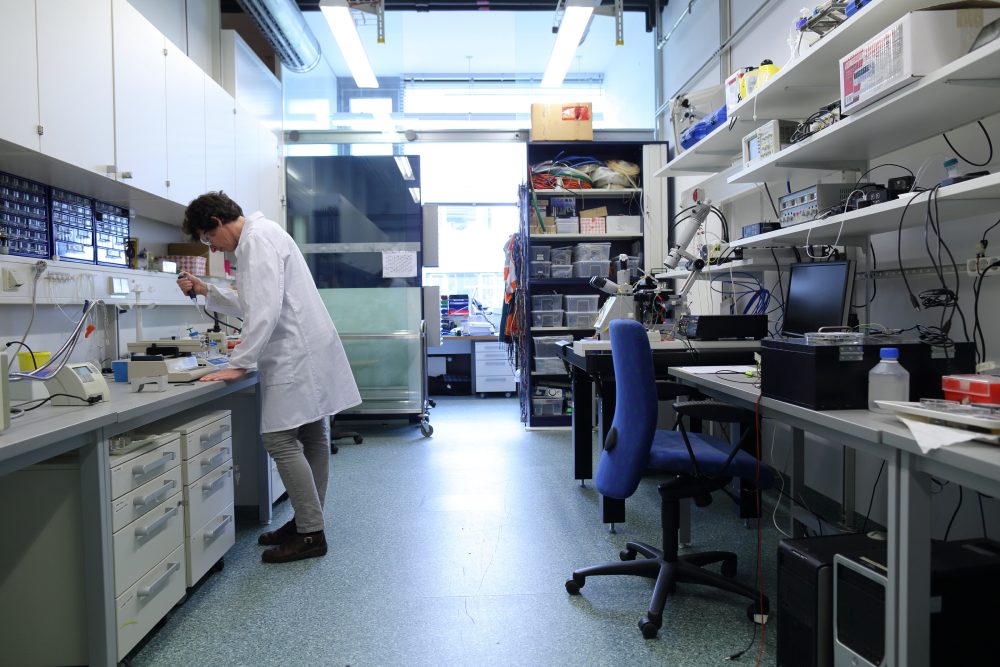
Why academic buying is different
A production line measures against one approved standard. A university measures to answer questions, teach a method and support many unrelated projects. That shifts the priorities toward versatility, published specifications, repeatability, data export, software compatibility, budget discipline and whether the instrument suits teaching as well as research.
One instrument may need to handle flat tiles, powders, films, liquids and fluorescent samples for different groups.
Research needs spectra and metadata, not only a displayed color value, so results can be recomputed and published.
Undergraduates, postgraduates and visiting researchers all have to produce comparable results from the same method.
Three audiences
Teaching, research and shared facilities evaluate instruments differently. Start with the pattern that matches your situation.
Prioritise student access, simple calibration, durable sample presentation and software that works on managed university computers. Several consistent instruments often teach more than one advanced system.
Define the measurands, sample states, geometry, aperture, transmission and UV needs, then require spectra, metadata and export formats that fit the analysis pipeline.
Control methods across users, projects and years. Method records, user administration, fixtures, auditability and documented performance checks matter as much as headline specifications.
Questions this hub answers
| Question | Where to start |
|---|---|
| Which spectrophotometer suits a university lab? | Define the use case and sample set first, then compare specifications against them. |
| Portable or benchtop for research? | Match the platform to sample handling and measurement mode, not to a perception of prestige. |
| What should a university spectrophotometer cost? | Budget the working system—accessories, standards, software, training and calibration included. |
| Which specifications matter most? | Repeatability, inter-instrument agreement, geometry, aperture, spectral range and data output. |
| Can it export spectral data? | Confirm export formats and metadata for the exact supplied configuration before purchase. |
| Reflectance and transmittance? | Treat them as separate capabilities and specify the modes the research requires. |
| What calibration documentation is available? | Distinguish routine calibration from independent, traceable or accredited calibration. |
| How many instruments for a teaching lab? | Base it on group size and real hands-on time; a rotation plan can stretch fewer units. |
Purchasing & support
We work with procurement teams, laboratory managers and principal investigators, and can respond in the format your institution requires.
✓Formal quotations and pro forma invoices
✓Specification sheets with stated test conditions
✓Vendor onboarding and tax documentation
✓Purchase-order purchasing for approved organisations
✓Calibration information and available documentation
✓Volume pricing for multi-instrument teaching labs
✓Technical support and method guidance
✓International shipping and tracked delivery
Specifying with confidence
Yes, when the sample handling and measurement mode fit the question. Portable instruments are widely used for reflectance on stable opaque specimens and for field or collection work. The limiting factor is usually transmission, sample fixtures or between-unit agreement rather than the format itself. Define the method first and verify performance on your own specimens.
Base it on group size and the amount of hands-on measurement the class requires. As a planning starting point—not a formal standard—one instrument per three or four students works well when repeated measurement is central. Larger cohorts can use fewer units with a deliberate rotation between stations.
Many current instruments provide PC software with data export, but the supported formats and metadata fields vary by model and configuration. If raw spectra are essential for your analysis, make the export requirement explicit and have it demonstrated before purchase rather than assumed.
Yes. We can provide formal quotations, specification sheets, vendor onboarding documentation, commercial invoices and supporting information for purchase orders, and we can respond in the format your procurement process requires.
Yes. Send the number of instruments, the courses involved and the intended timetable and we will prepare a quotation. Volume pricing is available for multi-instrument teaching setups.
Tell us the courses, research methods, sample types, data requirements and budget. We will help define the method and identify a configuration you can review.
Buying & Selection
Write a defensible spectrophotometer specification for a research grant or procurement tender, covering requirements, acceptance testing, total cost and supplier documents.
Technical guide · Read the guide →Color Science
Use spectral reflectance data in academic research by capturing metadata, recalculating colorimetric values, reporting uncertainty and managing datasets properly.
Technical guide · Read the guide →Instrument Specifications
Understand the spectrophotometer specifications that affect research quality, including repeatability, agreement, spectral range, geometry, aperture, data and calibration.
Technical guide · Read the guide →Buying & Selection
Compare portable and benchtop spectrophotometers for academic research by sample type, measurement mode, field use, repeatability, data and shared-lab workflow.
Technical guide · Read the guide →Buying & Selection
Plan a practical color-science teaching laboratory around learning outcomes, student access, repeatable methods, software, datasets and instrument management.
Technical guide · Read the guide →Buying & Selection
A practical framework for choosing a university spectrophotometer around teaching, research, shared-facility, sample, data and procurement requirements.
Technical guide · Read the guide →